A defensible instrument schedule connects each measurement to suitable equipment, settings, calibration evidence and practical limitations. The schedule should be specific to the test plan. A manufacturer’s maximum range is not automatically the range that can be demonstrated at a particular site.
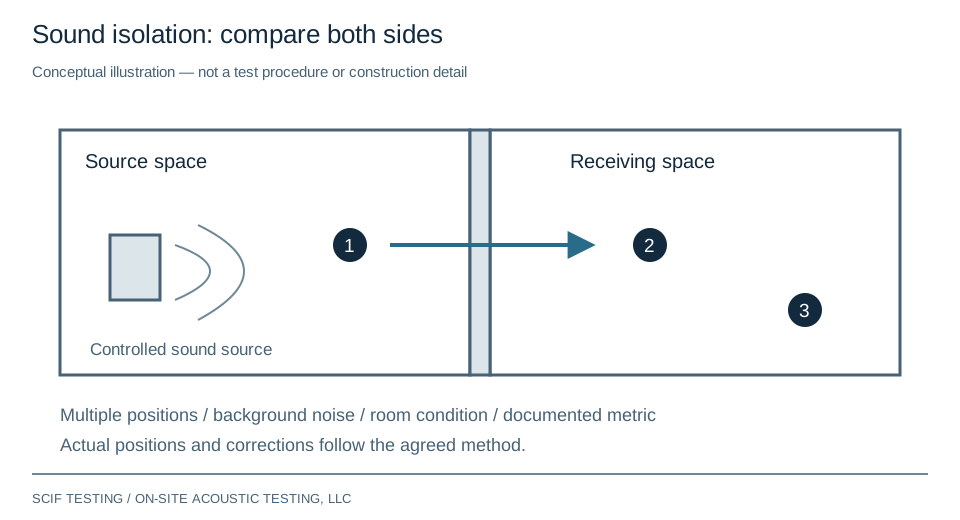
Acoustic measurement evidence
- Identify the analyzer, microphones, source and relevant accessories.
- Review the calibration status and field checks appropriate to the method.
- Confirm frequency analysis and processing required for the specified metric.
- Document background noise, room conditions and limitations.
RF measurement evidence
- Identify the controlled source, receiver, antennas, cables and relevant accessories.
- Review frequency coverage, reference measurements and system limitations.
- Document geometry, polarization, receiver settings and enclosure condition.
- Distinguish instrument noise, ambient RF and other limits on practical dynamic range.
Scope-specific confirmation
OSAT publishes a broader corporate methods overview. Exact instrument assignments, calibration records and usable test ranges should be confirmed for the proposed scope. This page does not claim that every listed method or frequency can be performed with every instrument or under every site condition.
Use the applicable licensed standards and approved project test plan for formal procedures. Web diagrams are conceptual; they are not substitutes for those procedures.
For an initial scope discussion, request testing using unclassified information only. OSAT documents measured performance; the responsible authority makes acceptance and accreditation decisions.