A specification that says only “test to IEEE 299” leaves practical questions unanswered. The team still needs an agreed edition, applicable enclosure scope, test conditions, frequency schedule and acceptance limits. A measurement method does not supply every project’s protection requirement.
Check the edition and status
The IEEE 299-2006 catalog record lists that edition as inactive-reserved. IEEE also lists P299 as an active revision project; a revision project is not a published replacement standard. Confirm the edition called up by the contract and any authority-approved departures. Recheck publisher status when preparing a new scope.
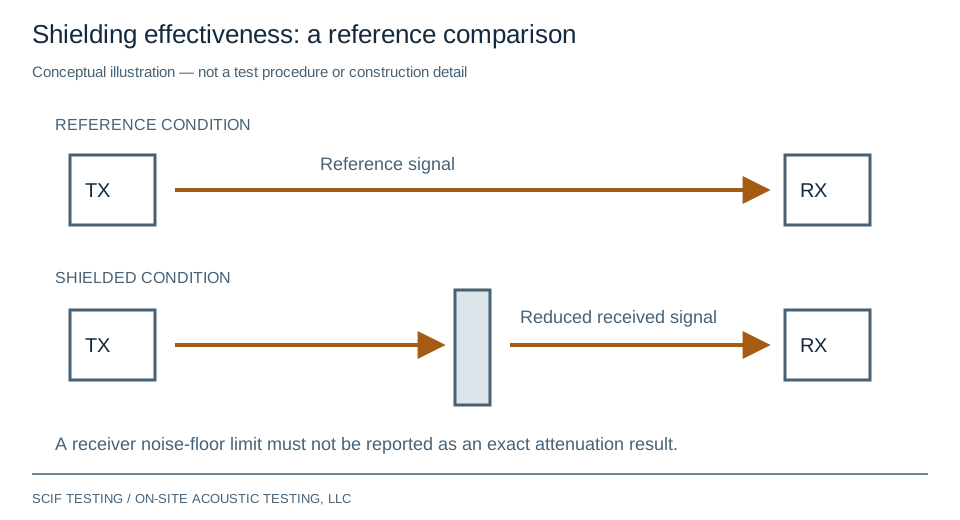
Review applicability before promising a result
Room-sized enclosures and small equipment boxes present different measurement problems. IEEE 299.1 addresses a different enclosure-size scope. Do not apply a room-enclosure arrangement to a small box simply because both are shielded. Use the applicable licensed method and document any agreed limitations.
- Confirm enclosure dimensions, access and installed completion.
- Agree frequencies, field regimes, polarizations and location coverage.
- Review reference measurements and achievable on-site dynamic range.
- Define how below-floor, unstable or inconclusive observations are reported.
- Agree the format for deviations, deficiencies and retesting.
The test plan should be reviewable before mobilization. It should not be reconstructed from a generic certificate after the measurements are complete.
For an initial scope discussion, request testing using unclassified information only. OSAT documents measured performance; the responsible authority makes acceptance and accreditation decisions.