An acoustic testing scope begins with a question: which protected space must be isolated from which receiving location, under what conditions, and against which approved criterion? A count of rooms alone does not answer that question. One room may have several relevant adjacencies; one door result cannot stand for an entire perimeter.
Build a boundary register
Identify each separation that requires evidence. Use project-controlled identifiers in the approved project system, and reserve the public website for general scope information. The register should distinguish walls, doors, glazing, penetrations and connections to other construction.
- Identify the protected and receiving sides for every test item.
- Record the specified metric, threshold, governing document and approving authority.
- Separate final acceptance items from diagnostic investigations.
- Agree the reporting format, coverage and conditions before mobilization.
Plan for the installed condition
Testing needs access to both sides of the selected boundaries, suitable source operation and documented room conditions. Background noise may limit the result. Furniture, finishes, ventilation operation and activity in adjacent spaces should be coordinated rather than treated as afterthoughts. Temporary sealing or other diagnostic changes must be identified separately from the acceptance condition.
Define useful evidence
The report should connect every reported result to a location, measurement method and acceptance criterion. Where conditions prevent a defensible result, the limitation belongs beside that result. A passing sampled item does not establish the performance of an untested boundary. See the combined readiness checklist before scheduling.
Choose the acoustic scope
- Secure door testing — Track each installed opening, its condition and the required evidence.
- Periodic retesting of existing SCIFs — Reassess door seals, penetrations and changes since initial verification.
- Conference and VTC rooms — Coordinate speech operation and adjacent receiving spaces.
- Sound Group verification — Align the requirement with the agreed field metric.
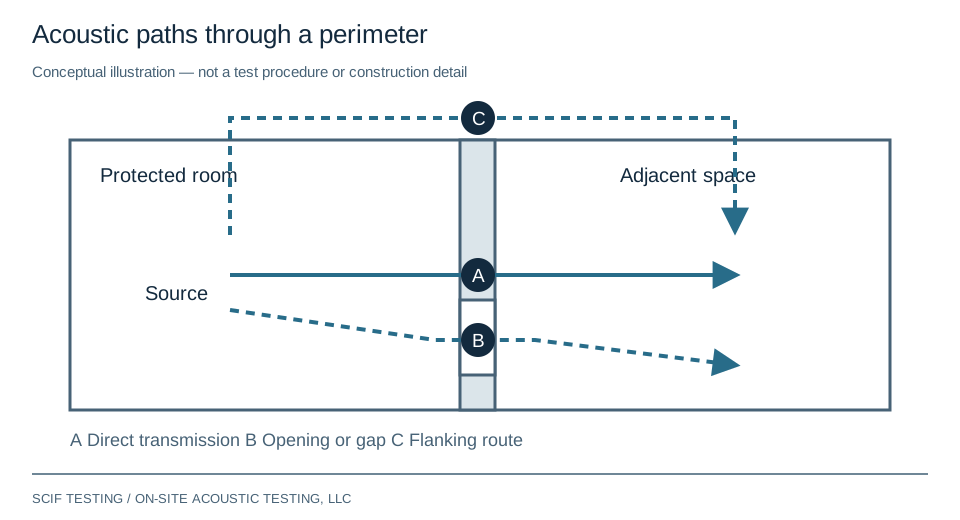
- Transmission-path investigation — Separate direct, opening and flanking paths.
- Remediation and retesting — Connect permanent repairs to repeat measurements.
For Special Access Program Facilities, see SAPF acoustic and RF testing scope and confirm the governing program criteria.
For an initial scope discussion, request testing using unclassified information only. OSAT documents measured performance; the responsible authority makes acceptance and accreditation decisions.